
This is the eighth in a series of posts written in mid 2025.
“I commend you because you remember me in everything and maintain the traditions even as I delivered them to you.”
1 Corinthians 11:2 (ESV)
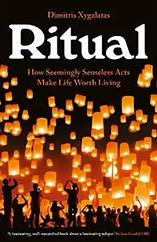 Ritual is one of humanity’s oldest mysteries: people treat it as deeply important, yet few can explain why. From handshakes to hazings, parades to prayers, coronations to christenings, every society practices rituals, many of which predate agriculture. Archaeologists often consider ritual to be one of the core defining features of modern humans, because it is related to the capacity for symbolic thought. Despite this persistence across cultures and centuries, their purpose has remained unclear.
I recently heard an interview with anthropologist on National Radio. He and his Connecticut grad students have explored this hidden side of human behaviour, using new technology and insights from many fields, to show how ceremonies from fishing rituals to fire-walking are forces that connect and unify us. He tells of Rafael Nadal’s prematch rituals with towels, his water bottle and his sock height, as well as a series of hand gestures. Serena Williams washes her hands thoroughly, ties her shoelaces ceremonially, and listen to Flashdance as she walks on the court. “It’s a way of placing myself and seeking order before I start,” she says. Across my other reading this month, I have noticed the plethora of rituals that occur in times of stress, such as war; the aviators of Squadron 617 (the Dambusters) didn’t only carry koalas or funny hats into battle; they peed on the back wheel of the Lancaster before every op!
The Connecticut anthropology research has identified two main motivations – albeit unwitting – for ritual behaviour. One is to reduce stress; repeated patterns are soothing and actually affect our neurotransmitters. But they also bond us together in community, even with people we don’t know. Xygalatas has dubbed this “collective effervescence,” a shared experience of excitement and connectedness; think of a rugby game. “Its a profound paradox” he says in his new book Ritual; “People ascribe the utmost importance to their familiar practices, but few can explain why they are so important”. It is one of the human universals, like language, cooking, kinship, dancing, music and art; anthropologists have found no exceptions to these basic commonalities, including that of ritual.
The ritual of pilgrimage has often crossed my path in recent months. That’s partly because one of my volunteer roles is to work with my clergy colleagues’ plans for Study Leave, the Presbyterian version of a Sabbatical. Not all of them make an actual journey – there are virtual pilgrimages these days – but many do, the Camino de Santiago being the popular choice. The ancient notion of literally following in the footsteps of others is deeply embedded in Western culture (remember studying the Canterbury Tales?) But for hundreds of years it has also occurred in other contexts – in Islam the Haj, in Hindusim the Kumbh Mela, in Greek Orthodox tradition the Pilgrim Way of Tino, where pilgrims crawl uphill on hands and knees to adore an ancient icon. However not all participants are motivated by religion; many simply seek an uncluttering of their busy digitally-proscribed life.
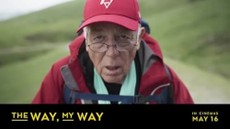 What is it about the epic journey that appeals to modern people of faith, of alternative spiritualities, or of none? A quick Google for Camino-themed books is huge – over 200 just in English. These including memoirs, guidebooks, travelogues, novels, and historical studies. There are also more than a dozen movies on that one specific pilgrimage; last year I enjoyed the Australian drama The Way, My Way about how walking the Camino transformed a grumpy old man.
The discovery of Xygalatas’ book has made me realise that pilgrimage is another form of ritual. We don’t always know why we are doing it. But it moves us and connects us. Ric and I recently enjoyed a short but timely holiday in a part of Canada we have not visited before; I found this book gave me a new perspective on our now-annual OE, which we never did in our impoverished twenties. I’m not up to a 38-day hike in Spain, but I could be mindful as we sailed up the Atlantic Coast into Canada, looking in vain for the hoped-for fall foliage, and visiting little ports where the big ships don’t go. We experienced some local rituals, such as putting cheese and gravy on your chips (poutine), or learning the long history of human settlement in Quebec. I retrieved my school Cert French, and remembered to genuflect in the cathedrals; on the 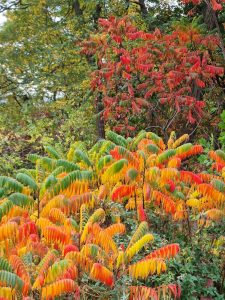 magnificent St Lawrence Seaway, we did finally see some stunning autumn colours. We met some interesting people – on board our small ship, in a cider orchard and a fishing museum, and in the ‘collective effervescence’ of churches we visited. All viewed prayerfully through the lens of pilgrimage, rather than tourism. We also had a few days in California with our American Kiwi-Chinese grandsons, often gathered around a table – another family ritual. Our sense of identity was indeed strengthened, and the calming of stress an added blessing.
So what rituals can you identify in your social circle? Gathering for a family meal is not just for Christmas, but can become a regular commitment. Congregating for golf, or even going to the hairdresser could be seen as rituals. So can an annual adventure in some never-before visited place around the world. Don’t overlook the power of ritual, an ancient and inextricable part of human nature and of the faith of our fathers. It may take many forms, but remains a powerful tool for promoting resilience and solidarity. In a world full of ever-changing variables, ritual is a much-needed constant.
Are there beloved rituals in your community life? If so, how do you you capture the ‘holy’ moments of the everyday?